Rotisserie
Cumulative ranking across 10 or so counting stats. Standings update daily and the season winner is the team with the best aggregate ranking. Daily check-ins matter more than weekly lineup swaps.
Baseball is the slowest of the four ESPN Fantasy sports and the one that rewards roster construction over weekly tinkering. This hub covers how each format actually scores, where transactions limits bite, and the daily lineup routine that closes the gap between a competitive team and a winning one.

Three formats work on ESPN baseball, and they are not interchangeable. Each one rewards a different roster shape and a different weekly workload.
Cumulative ranking across 10 or so counting stats. Standings update daily and the season winner is the team with the best aggregate ranking. Daily check-ins matter more than weekly lineup swaps.
Weekly matchups of 5 to 10 stat categories per side. Win counts by category wins, not by total points. Most competitive format; rewards streaming and daily lineup work.
Each event has a numeric value. Total points per week decides the match. Easier to set and forget, but harder to scout edge cases — the platform still supports it.

Batting average, ERA, and WHIP are ratio categories. Home runs, RBIs, stolen bases, saves, and strikeouts are counting categories. Counting categories compound in your favor over a long season — every plate appearance matters — while ratio categories punish big swings, so a couple of bad starts can sink an ERA or WHIP for the year.
The strongest roster construction targets a balanced split. If you draft three elite power hitters, your stolen-base totals will lag. If you draft three speed-first bats, your HR and RBI totals will lag. Aim to rank in the top half of every counting category before you worry about ratios.
Many ESPN baseball leagues cap innings pitched per week or per season. Going over disqualifies that week, so streaming starters becomes the highest-leverage pitching move: pick up a two-start pitcher on a favorable matchup, drop him after the start, repeat.
Build your rotation around three or four reliable starters who give you a weekly floor of innings, then stream the rest. Skipping a Tuesday spot start to preserve a marginal arm is rarely worth the counting-stat edge you give up.
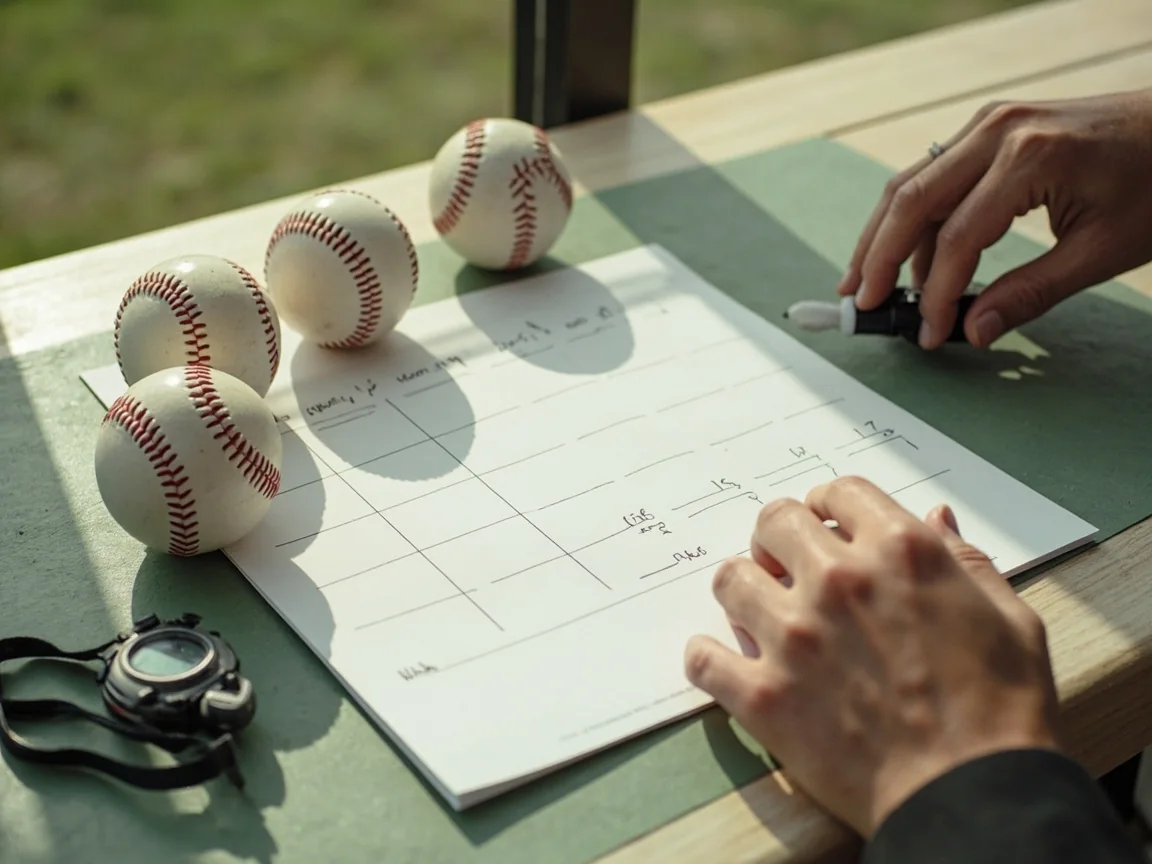
Streaming is the act of adding a player for a single day's favorable matchup, starting them, and dropping them after. It is the single largest source of counting-category wins a roster can pick up.
Three matchup filters consistently produce above-average streams. Use them in combination with your league's transaction cap.
| Filter | Why it works | Window |
|---|---|---|
| Two-start pitchers | Doubles counting-stat output | Weekly |
| Platoon bats vs LHP | Right-handed power in a lefty park | Daily |
| Home park upgrades | Coors / GABP boost run-scoring | Series |

Confirm lineups post every starting pitcher news update (usually 30 minutes before first pitch). Move a rested regular into a starter's spot when the starter gets a surprise day off. Drop any bench player who will not start that day back to the wire to keep transactions free.
Do not react to one bad day. Baseball variance is enormous — even the best hitters hit .250 over a week. The goal of the routine is process, not short-term reaction.
Two timing questions decide most of the trade market on a long baseball season.
Quick factual answers to the questions that come up most often on baseball-focused ESPN leagues.
Rotisserie ranks teams cumulatively across the same set of counting stats at the end of each matchup period. Head-to-head categories splits those same stats into weekly winners and losers. Points leagues assign a numeric value to each event and total them across a week.
ESPN baseball leagues can set a weekly or season innings cap that counts only starts made by your roster. Going over the cap disqualifies the week or the season depending on the rule, so monitor your weekly total and stream spot starters with strict pitch counts.
Transaction limits vary by league. Most public ESPN leagues set 5 to 7 adds per week and reset on Monday. Private leagues may allow unlimited moves or use FAAB for bids. Confirm your league's settings panel for the exact cap.
Daily lineups let you stream hot bats and spot-start favorable pitchers, which is the highest-leverage edge in H2H categories. Weekly lineups reduce the workload but forfeit a meaningful share of expected wins in tight leagues.
A standard ESPN baseball roster is 2 catchers, 1 first baseman, 1 second baseman, 1 shortstop, 1 third baseman, 1 middle infield, 1 corner infield, 5 outfielders, 9 pitcher slots, plus a 5 to 7 player bench. Some private leagues compress this to one universal utility spot.
ESPN baseball leagues run roughly 26 weeks from late March to late September. H2H playoffs are usually 3 weeks; rotisserie leagues simply use the final standing after week 26.
Baseball is the sport where obsessive daily checking burns out the most managers. Decide on a daily window — for example, lineup confirmations at 11 a.m. and transaction review at 9 p.m. — and skip the rest. The numbers are the same at the end of the week.
Use the official ESPN Fantasy sign-in to create or join a baseball league, then come back to the draft guide for season-specific prep.