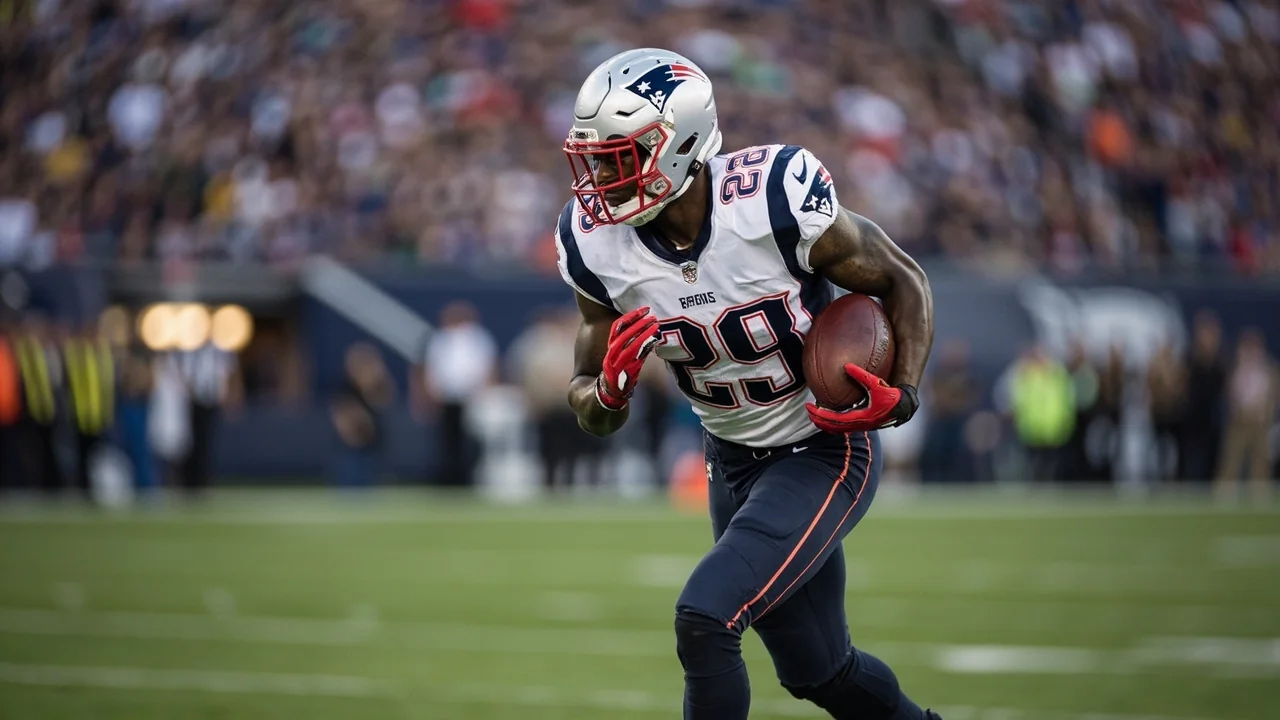
NFL.com's 2026 fantasy WR tiers, written by Dan Parr and built on FantasyPros scoring, push A.J. Brown into the top five at No. 5, ahead of CeeDee Lamb, Justin Jefferson, George Pickens and Drake London. The list, posted on July 15, 2026, is the first major national ranking to formally absorb Brown's trade to New England and the quarterback change that comes with it.
Brown sits in Parr's Tier 1, a five-name group that includes the consensus top four and Brown as the fifth. Being in Tier 1 rather than Tier 2 is the meaningful move; the four names above him were widely expected to lead the 2026 conversation, and Brown being grouped with them is a clear endorsement of his New England projection. Tier 1 designations, in tier-based draft formats, separate the safe top-five selections from the larger pool of high-end WR2s that begin at Tier 2.
For fantasy managers, the practical read is that Brown is no longer the volatile Philadelphia asset he was in 2024 and 2025. The volume concerns that dragged him down in box-score metrics last season are now an offensive fit question rather than a quarterback-trust question. The Patriots traded for him precisely because they want a featured outside receiver, and the depth chart in New England is built around him rather than around a contested committee. That, more than any individual stat line, is what kept him in Tier 1.
How the top five breaks down
The Tier 1 ordering is Ja'Marr Chase at No. 1, Puka Nacua at No. 2, Jaxon Smith-Njigba at No. 3, Amon-Ra St. Brown at No. 4, and A.J. Brown at No. 5. Behind them, the same Tier 1 group also names CeeDee Lamb, Justin Jefferson, George Pickens and Drake London as part of an expanded high-end tier that most draft boards will still treat as first-round receivers.
Chase at No. 1 is a familiar consensus call. Nacua at No. 2 is more interesting. The article flags him as a "huge year" candidate on an expiring rookie contract and notes that he "checked into a rehabilitation facility" earlier in the offseason. That last detail is the kind of caveat that would normally knock a player down a tier; instead Parr keeps him in the top two, which suggests he is reading the rehab visit as a short-term detour rather than a season-long concern. Managers who build around that read will get the upside of a healthy Nacua at a draft cost that assumes some risk.
Jaxon Smith-Njigba at No. 3 is the easier call to defend. He led the league in receiving yards in 2025 and finished as the fantasy WR2 on the season. He enters 2026 as the established target on a stable Seattle passing attack, and Tier 1 is the minimum a player of that profile belongs in. Amon-Ra St. Brown at No. 4 is similarly well-grounded: he is the only NFL player to finish among the top three fantasy WRs in each of the last three seasons, and he led the league with 35 red-zone targets last year. A red-zone target leader on a high-volume passing offense is almost a structural Tier 1 pick.
Why Brown stays in Tier 1 with a new quarterback
The Patriots' trade for Brown was the underlying story that made the July 15, 2026 ranking worth publishing on its own date rather than as part of a broader training-camp roundup. The article explicitly notes that Brown now plays for New England and that Patriots quarterback Drake Maye is expected to target Brown heavily, calling Brown "the best receiver he's ever had as a teammate." That quote is the cleanest framing Parr could offer a fantasy audience: it removes the quarterback-trust variable from Brown's projection and replaces it with a young quarterback publicly committing to a featured role.
Maye is not yet an established top-ten fantasy passer, so a Tier 1 receiver attached to him carries more risk than a Tier 1 receiver attached to an elite veteran passer. That is the implicit reason Brown sits at No. 5 rather than higher in the tier: he has the same role-based argument as the names above him, but his quarterback is still proving himself. The Patriots' offseason, which is the lead-up to training camp, will be the period where fantasy managers watch for any Maye-to-Brown connection reports that move the needle in either direction. For the moment, Tier 1 with a quarterback-development caveat is the read.
The waiver-wire implication is straightforward. Managers who draft Brown in the first round will want to hold a Patriots beat-report on their phone for the first two weeks of preseason. A modest dip in target volume or a slow camp build is not enough to drop him from a Tier 1 read; a full-scale offensive scheme change or a serious injury to Maye would be. Until one of those happens, the structural argument Parr lays out is the argument that fantasy managers should be carrying into their draft rooms.
What changes in Philadelphia without Brown
The same article flags DeVonta Smith as a moderate bounce-back candidate in Philadelphia now that Brown "is out of the way." Smith has lived under Brown's target shadow for three seasons, and the projected bump in target volume is the cleanest case for a Tier 2 receiver moving up draft boards. Parr's framing is that Smith projects a steady fantasy WR2 floor rather than a ceiling play, which is the right read: a fifth-or-sixth-round target on a stable offense is useful without being a league-winner.
The wider effect on Philadelphia's pass-catching order is the more interesting draft-time read. If Smith gets the vacated targets, his fantasy WR2 floor is real, and managers who missed on a Tier 1 receiver should consider Smith in the WR2 window rather than reaching for a more volatile Tier 3 name. If the Eagles split the vacated targets across their tight ends or hand significant work to a younger receiver, Smith's floor erodes quickly. The Philadelphia beat will be the second-most-watched pass-camp reporting after the New England beat, because it directly affects the WR2 pool that surrounds Brown's Tier 1 anchor.
A second-order effect is on Dallas Goedert and the Philadelphia tight-end room. Tight ends who benefit from vacated receiver targets tend to get a one-week market bump that lasts about a month of preseason coverage, and then settles. Fantasy managers who already roster Goedert can ignore the noise; managers fishing on the wire for a one-week speculative add are usually better off reading the Eagles' snap splits than the headline.
Tier 2: the WR2 pool that draft decisions are actually made in
Tier 2 of the same rankings names Nico Collins, Rashee Rice, Chris Olave, Tetairoa McMillan, Tee Higgins, Garrett Wilson, DeVonta Smith, Zay Flowers, Malik Nabers, Emeka Egbuka, Jaylen Waddle, Terry McLaurin and Ladd McConkey. That is fourteen names competing for the second tier of draft boards, and the practical implication for a twelve-team league is that only about half of them will be available by the time the second round ends.
Tier 2 is where most draft decisions actually get made. Tier 1 receivers are taken in the first round almost regardless of league type; Tier 3 receivers are taken in the third round and beyond as upside plays. Tier 2 is the rotation group, and the names in it are the ones a fantasy manager has to rank against each other in their own personal board before the draft starts. The NFL.com list gives a useful starting point, but managers should adjust for their own scoring format, league size, and roster construction before treating it as authoritative.
For managers running FAAB waivers rather than priority waivers, the Tier 2 list also doubles as a buy-low target list. If any of the Tier 2 names gets dropped by a panicking owner in the first two weeks of the regular season, that is often a one-week window where the FAAB market undervalues a name that NFL.com has explicitly placed above the Tier 3 pool. Watching for that drop is one of the simplest leverage points an FAAB manager has, and the NFL.com tier list is the cheapest way to identify candidates worth the bid.
Waiver and trade implications for the first month
The first practical implication is on the draft. Managers using tier-based draft software can plug the NFL.com tiers in directly; managers using rank-based software should treat the four names above Brown as locked in their top-four order and use the rest of Tier 1 as the early-second-round anchor. Managers who play best-ball formats, where the regular-season waiver wire does not matter, can use the list as-is. Managers who play head-to-head formats should pay extra attention to the schedule surrounding the Patriots' early-season opponents, because Brown's weekly ceiling is more dependent on game-script than a Tier 1 receiver on a more established passing attack.
The second practical implication is on the trade market mid-season. If Brown opens the year with two quiet weeks, his fantasy owner is likely to discount him, and his NFL.com Tier 1 designation becomes a useful anchor for a buy-low offer. If Brown opens with two monster weeks, his fantasy owner is likely to value him above Tier 1, and a sell-high offer becomes available. Either way, the tier label is a useful benchmark because most casual trade negotiations in fantasy football drift away from tier labels within the first month of the season. Holding onto the tier label as a sanity check is one of the simpler trades a fantasy manager can make.
The third practical implication is on FAAB waivers. Managers who roster Brown should keep a small FAAB reserve unspent in the first month of the season specifically to cover a Patriots beat-report injury or suspension to a Patriots running back or tight end. Brown's target share is unlikely to change because of a Patriots running-back injury, but his red-zone usage can move noticeably when the backfield thins. Knowing the value of a 35-target wide receiver in a Tier 1 read is a much cleaner bidding position than guessing from week to week. For managers looking at the broader waiver and trade framework for how to handle those decisions, the NFL.com tier list is a useful external input but not a substitute for the actual workflow.
What to watch through training camp
The next two weeks of training-camp reporting are the highest-leverage fantasy window for this story. Three things in particular will move Brown's Tier 1 designation up or down. First, snap-share data from early Patriots practices: a clear No. 1 role on the outside, where Brown has spent his career, is the minimum required for a Tier 1 read to hold. Second, Maye's chemistry with Brown on contested catches: the Eagles' offense leaned on Brown's contested-catch ability, and the Maye-Brown connection on the same kind of throws is the most reliable predictor of a top-five finish. Third, the Patriots' use of two-tight-end sets, which would cap Brown's route volume and is the cleanest path to a Tier 2 projection.
Two other storylines are worth tracking in parallel. Puka Nacua's rehab note is the kind of detail that does not move a Tier 1 ranking immediately but can move it after a slow preseason. Managers who draft Nacua in the top two should track his early-camp participation closely and be ready to either lock him in or move down the draft board. Amon-Ra St. Brown's red-zone target leadership is the structural argument that keeps him at No. 4, and any shift in Detroit's red-zone usage toward the tight end room or the run game is the cleanest negative signal on his Tier 1 standing.
The wider takeaway is that tier lists of this kind are useful as starting anchors, not as final rankings. The NFL.com July 15, 2026 list gives managers a five-name Tier 1, an expanded Tier 1 of nine names total, and a fourteen-name Tier 2 to work from. Each name carries a different draft cost, a different trade cost, and a different waiver-window sensitivity. Treating the list as a starting point and adjusting for league format, scoring, and personal risk tolerance is the work that turns a tier list into a draft board, and the work that turns a draft board into a competitive roster. The Patriots' training camp opens that work in earnest, and the next meaningful revision of these tiers will land once preseason games begin.